







Completed: August 2026
Location: Knoxville, TN 37917
TPO Flat Roof Replacement at a North Knoxville Church
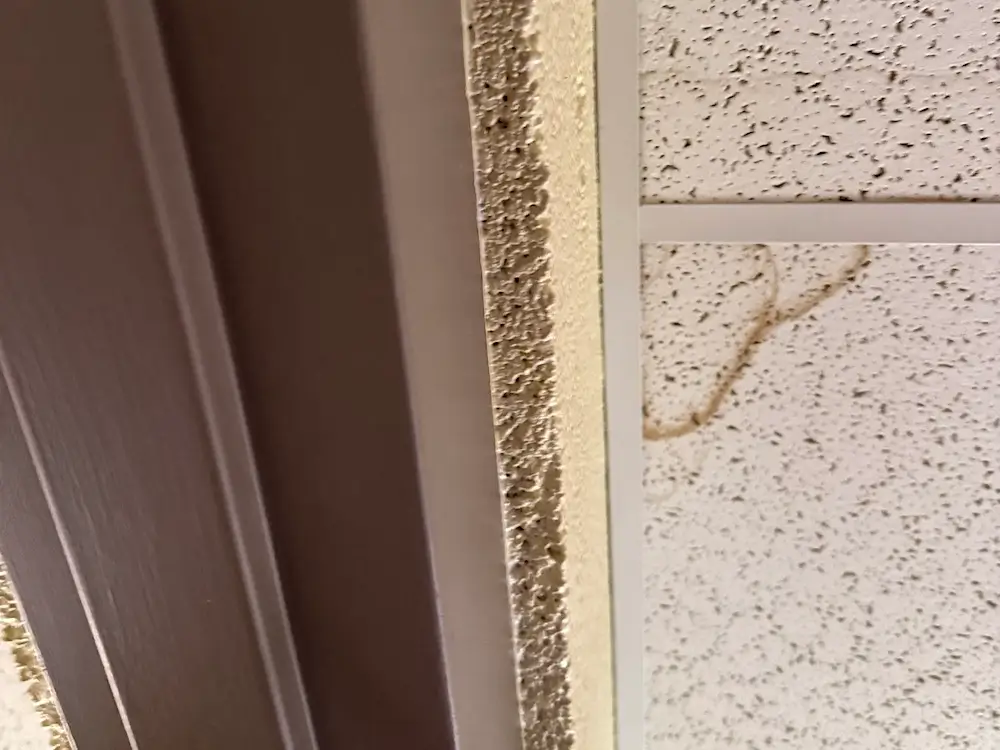
St. James Episcopal Church had a problem nobody could ignore. Water was coming into their nursery.
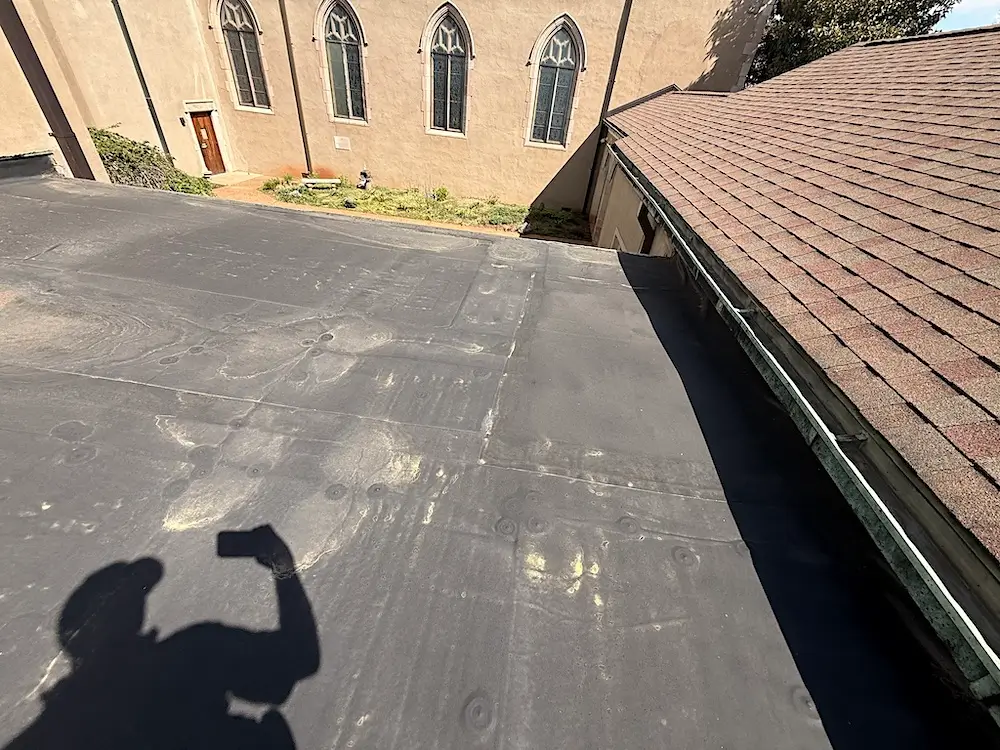
The source was a flat section of roof between steeper shingled sections, covered with an EPDM rubber membrane. It is not a big area, roughly 24 feet by 23 feet, but small roofs cause big problems, and the room underneath was one the church could not simply close off and deal with later.
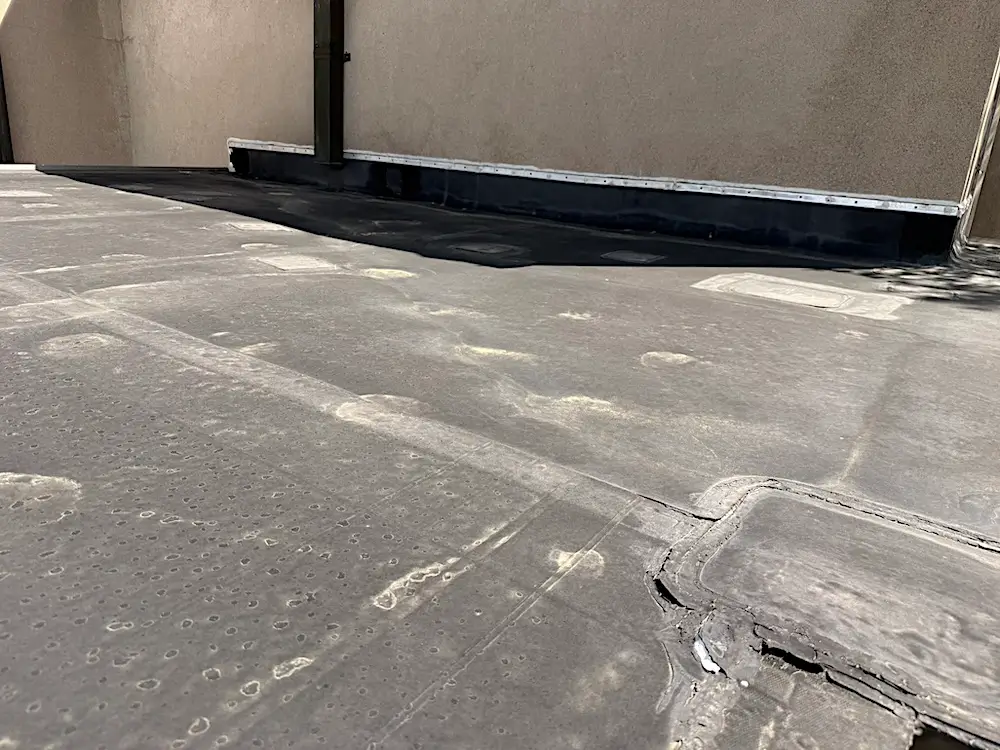
Membrane roofing is the right material for flat and low-slope areas like this one, and you find it on churches, schools, and commercial buildings. It does have a service life, though, and its ability to shed water drops off sharply once a roof has been patched a few times. That was the case here. The membrane had old seam repairs and was split right beside one of them.
Church projects come with a step that residential work does not have. A board has to approve the money before anything happens, and that can stretch a timeline out by months. In this case it did not. After our inspector pointed out every spot where water had shown up, the vestry approved the nursery section quickly so the crew could get started while decisions about the rest of the property continued on their own schedule.
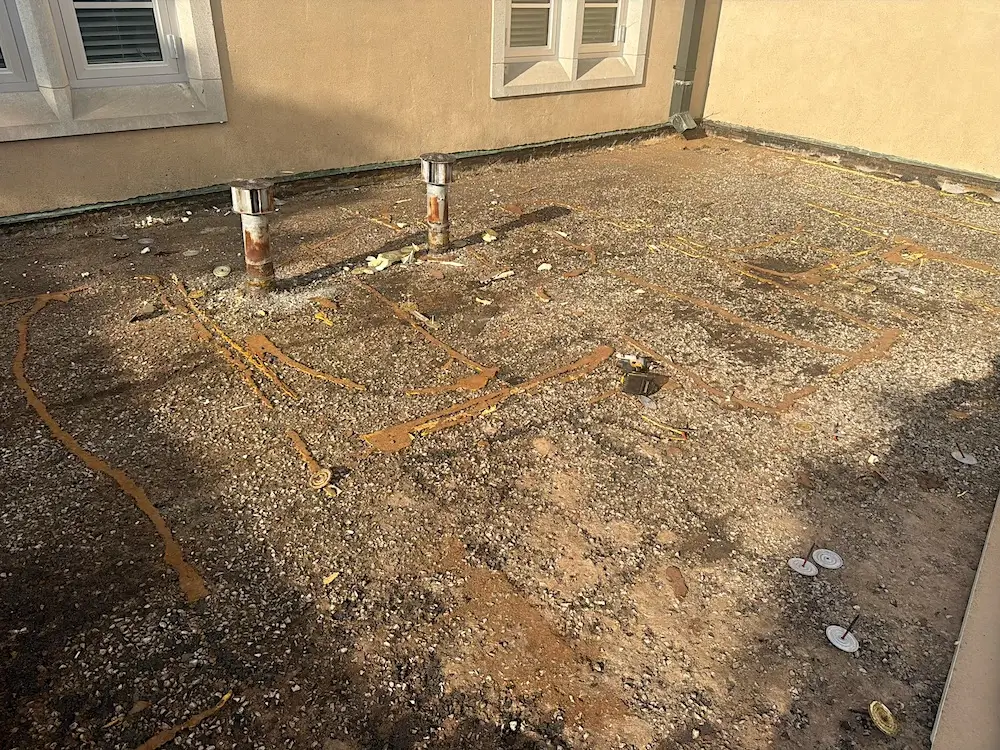
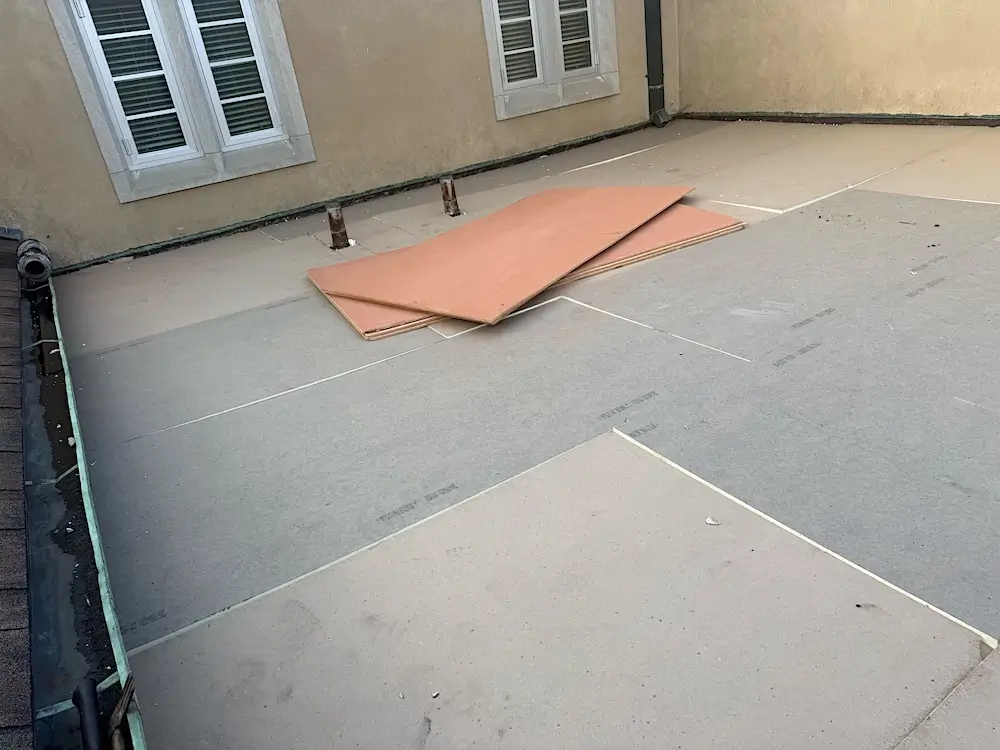
The old roof came off in layers, which is normal on a building of this age. Under the EPDM the crew found half-inch insulation board sitting on an older built-up roof, and all of it had to come off down to the substrate. Once the surface was clean and prepared, the new assembly went on. First an inch and a half of Polyisocyanurate foam insulation, set in OlyBond500, a two-part foam adhesive. Then a half-inch STRUCTODEK HD cover board on top, which protects the insulation and gives the membrane a solid, compatible surface to bond to.
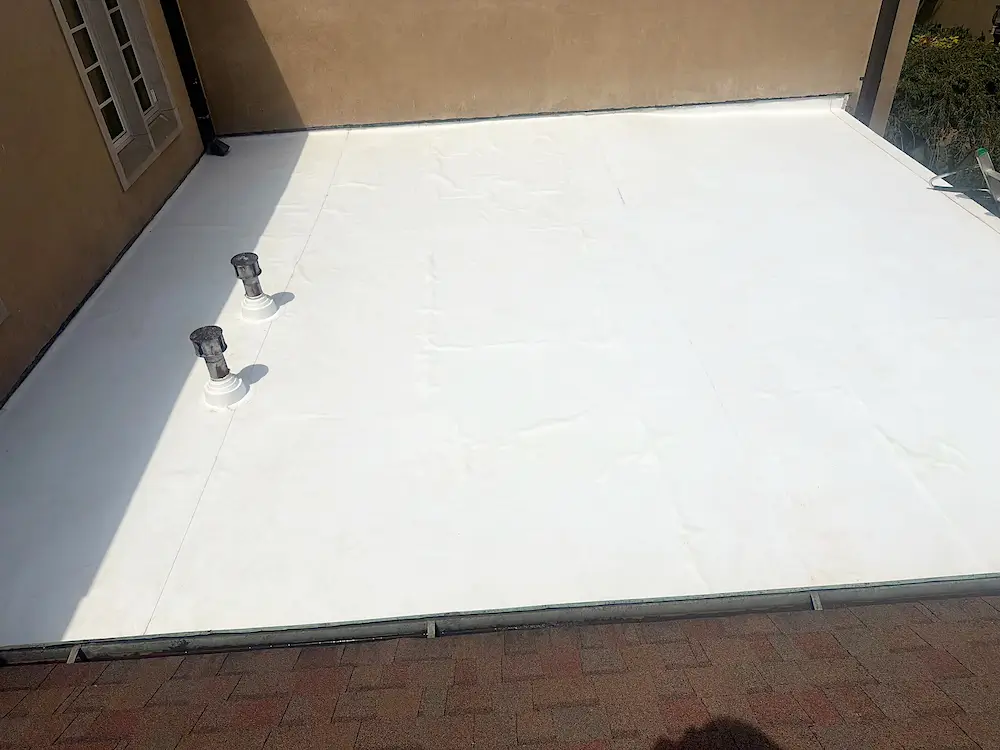
Then came the part that will keep the nursery dry. The new surface was changed to TPO, short for thermoplastic polyolefin, a single-ply membrane made from a blend of polypropylene and ethylene-propylene rubber. Three things make it a step up from what was there. It is white, so it reflects sunlight instead of absorbing it the way the old black rubber did. Its seams are heat welded rather than glued or taped, so the finished roof behaves more like one continuous sheet than a set of overlapping panels. And it holds up to the foot traffic that any flat roof gets when someone goes up to service equipment or clean.
The details got the same treatment. Both pipe vents received new TPO boots bonded directly into the membrane. New drip edge went in along the gutter line to anchor and seal the membrane edge, and termination bars secured the perimeter where the roof meets the walls. The existing gutter stayed in place, since replacing it was not part of this project.
The nursery is now dry. The congregation has one section of roof it does not have to think about for a long time, and the work carries a five-year workmanship warranty from Smith Roofing & Exteriors.
Project Specifications & Additional Upgrades
- Primary Roofing Material: Mule-Hide TPO sheet, .060
- Cover Board: Blue Ridge Fiberboard STRUCTODEK HD
- Insulation: Polyisocyanurate (ISO), 1.5-inch
- Flashing: Versico VersiWeld TPO Universal Pipe Boot in white
Dedicated Project Manager: Jabrielle Pruitt
“Very impressed with the new roof on our church. Smith was professional, knowledgeable, and worked quickly and efficiently to finish. Jabrielle was professional and worked hard himself to get the job done. I would recommend Smith to anyone. Our church looks beautiful.”
— R. M.
Verified Google review for this project, left August 11, 2026.
Project FAQs
Q: Why replace the whole flat section instead of patching the leak one more time?
A: The membrane at St. James had already been repaired several times, and there was a leak right beside one of those patches. That pattern usually means the membrane itself has reached the end of its life rather than having one isolated failure. On a low-slope roof, every new patch adds another seam and another edge that can fail later. Replacing the section stops the cycle and resets the clock on the whole assembly, including the insulation underneath, which patching never addresses.
Q: How does board approval change the timeline on a church roofing project?
A: Church and nonprofit projects almost always need approval from a vestry, board, or committee before deposit checks are written and work can be scheduled, and that step is outside a contractor’s control. It can add weeks or months. The practical solution is scoping the work so a board can approve it in pieces. At St. James we quoted the leaking nursery section separately from the main chapel and from the remaining roof areas. That let the board solve the urgent problem quickly while taking the time it needed on other decisions.
Q: Our church has both a steep section and a flat section that leaks. Can one contractor handle both?
A: Yes, and it’s worth insisting on it. A steep shingled roof and a low-slope membrane roof are different systems with different materials and different failure points, and the transition between them is often where leaks start. St. James is a good example: the replaced section sits directly between a shingled slope and a stucco wall, so the flashing details at those transitions mattered as much as the field membrane did. Learn more about our church roofing work across East Tennessee.
Does your church have roof leaks?
Don’t wait for small drips to turn into big problems. Call us today!