
What Goes Underneath a Roof?
Jun 28, 2025
When you look at a roof, you see the shingles, the metal panels, or the tiles. The exterior of the roof isn’t the only part of the roof, however. There’s a lot that goes on underneath the roof to protect your home from the elements. So what, exactly, goes underneath the roof and how does it benefit your home?
Summary:
A roof is a complex, layered system designed to protect your home.
- The Core Layers (Bottom to Top): Trusses (frame) –> Decking (base) –> Ice & Water Shield (vulnerability protection) –> Underlayment (moisture barrier) –> Shingles (outer defense).
- The Support System: Ventilation, insulation, and radiant barriers regulate attic temperature and moisture.
- The Big Takeaway: Every layer must work together. Cutting corners on quality materials or professional installation inevitably leads to leaks and premature failure.
What Are Roof Trusses?
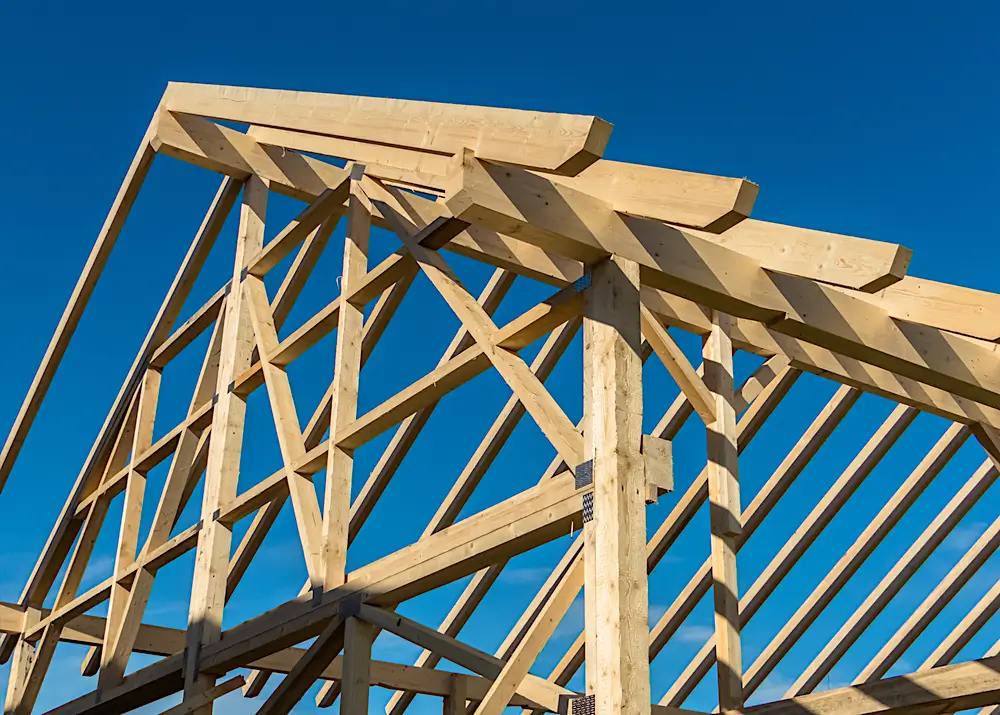
The roof trusses are the wooden beams that form the base of the roof. This is the frame of the house that all other layers of the roof sit on top of.
What Is the Roof Deck?

The roof deck is the lowest layer of the roof and sits on top of the roof trusses. Typically, the roof deck is made out of OSB engineered wood panels or plywood.
What Is Ice & Water Shield?
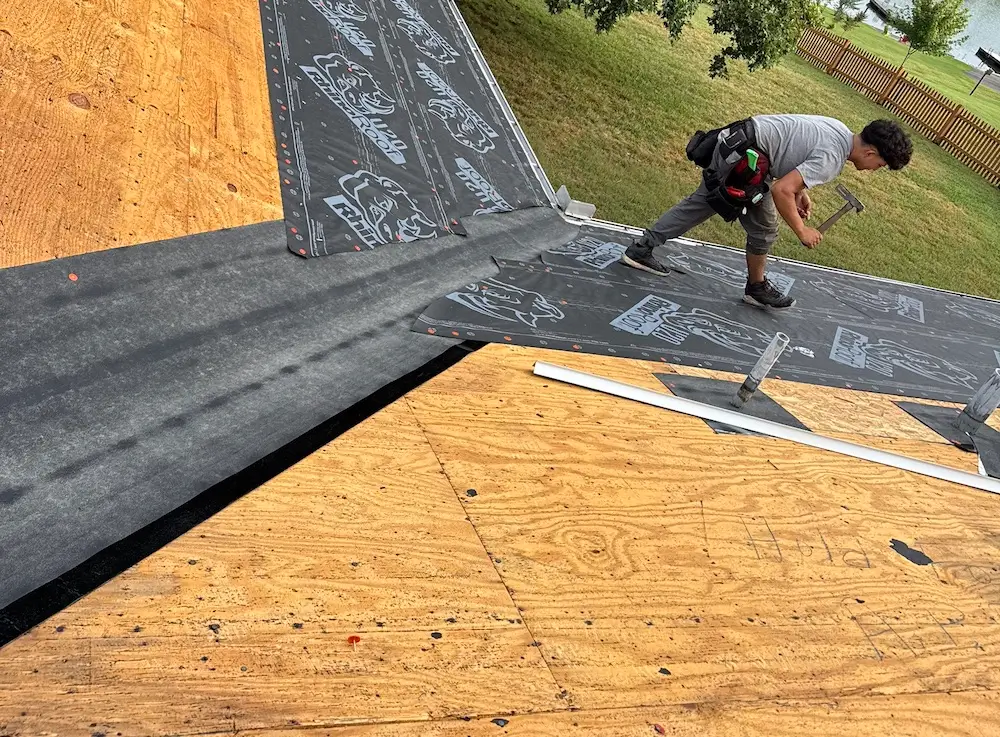
Underneath the underlayment is a water shield that, as the name implies, is meant to give your roof added protection from water and ice. This specialized material adheres with a glue-like consistency, rather than being nailed to the roof deck like underlayment. This extra thick, waterproof layer protects your home from water damage by creating a barrier at the eaves, valleys, or anywhere water could get under the top layers of the roof.
What Is Roof Underlayment?

Roof underlayment is the layer directly beneath the shingles, tiles, or whatever roofing material is used on the outermost layer. The underlayment is a water-resistant layer that’s usually made out of rubber, fiberglass, or felt. Water in its liquid form isn’t able to pass through the underlayment, so even though it is water-resistant instead of completely waterproof, it can still protect your home from the rain while allowing moisture to pass through as needed.
What Is a Radiant Barrier?
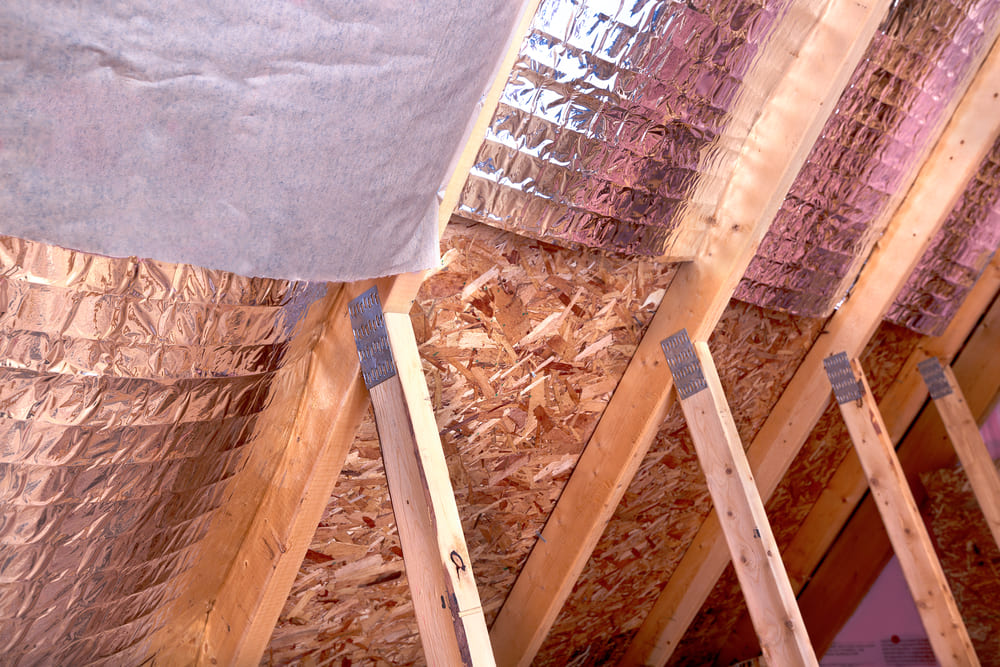
A radiant barrier is an optional layer that is applied to the side of the roof deck that faces down into the attic. This barrier helps to block UV rays from entering the home and helps to reduce heat and lower energy bills.
What Is Roof Ventilation?
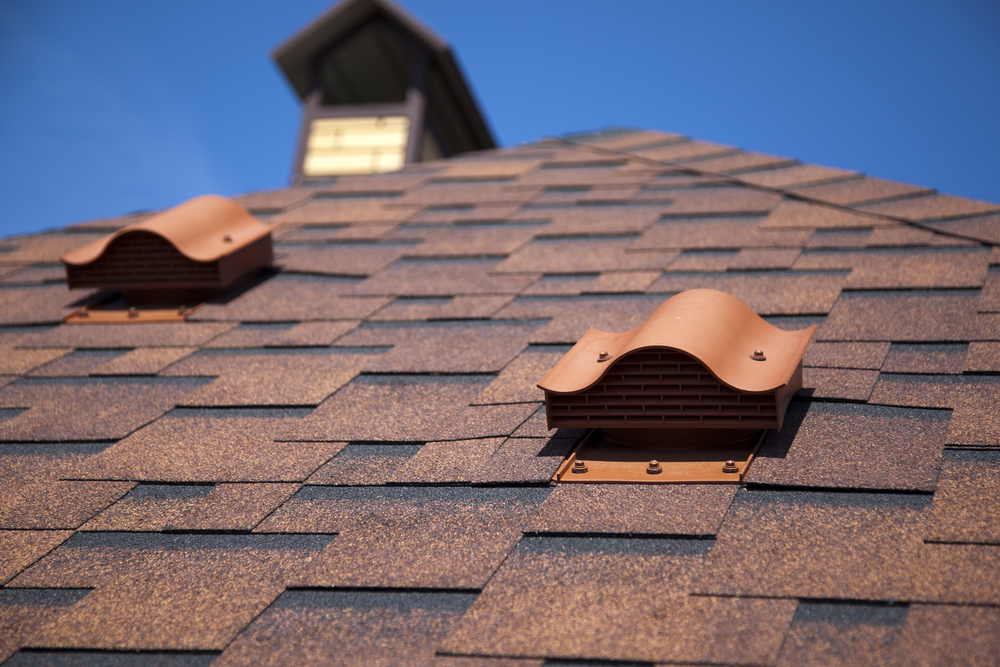
In the Knoxville area, proper attic ventilation is critical to combating our humid summers. Moisture and heat rise and can get trapped in the attic and cause mold and mildew problems. Without this ventilation, heat can “cook” shingles causing many shingle-related problems such as nail-pop and blistering.
>> Related Reading: Roof Damage ExamplesThe ventilators in the roof go through all of the above layers but have to connect to the attic so that hot, moist air can flow through to the outside. Vents can be either passive (a simple vent) or active (motorized fans that turn on automatically when attic temperatures reach a certain level).
What Is Roof Insulation?

Insulation helps to regulate the temperature inside the house by blocking out heat and cold during the summer and winter, respectively. It is placed against the underside of the roof deck where it can prevent heat or cold from entering the attic.
Contact us
Reach out to our team to schedule your free evaluation or get your questions answered.
